Confucius
I ChingConfucius appears here both as a historical reader of the Yijing and as the authoritative figure to whom later tradition attributed its Appendixes. The account makes his late-life study vivid—the bound tablets were read until their thongs wore through—while separating the older Text from the writings associated with him. Its central qualification is decisive: the testimony for Confucius’s editorial role is real, but examination of the Appendixes weakens any claim that he composed all of them, and leaves even his authorship of the rest uncertain.
Late-Life Study and the Yijing
The account places Confucius’s sustained attention to the Yijing near the end of his life, after his long and painful wanderings among the States and his return to his native Lu. He was then nearly seventy. A saying attributed to him imagines that, given additional years, he would devote fifty to studying the book and might thereby avoid serious errors. The author regards the numerical detail as corrupt, but uses the report for a narrower historical purpose: it attests to the existence of a Yijing in Confucius’s time.
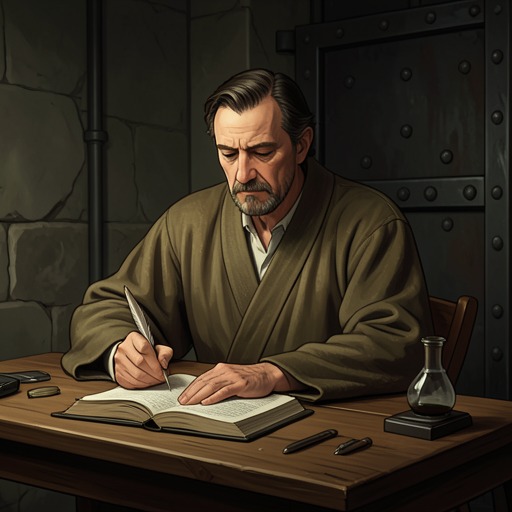
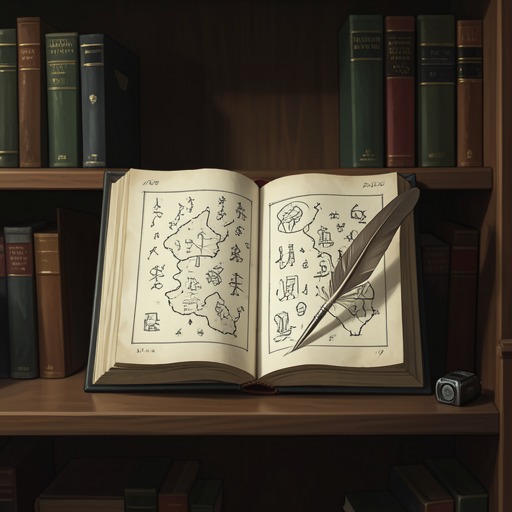
The same biographical tradition, reported by Sima Qian, says that Confucius became fond of the Yijing in his closing years, wrote appendixes to it, and read it so intensely that the leather thongs binding its tablets were worn out three times. The account also reports his wish for several more years in which to master the book. The worn bindings give physical form to the tradition’s image of diligent study; they do not, by themselves, establish which surviving commentaries he wrote.
The emphasis marks a change in the picture of Confucius’s intellectual interests. He had previously delighted in discussing the books of History, Poetry, and Rites and Ceremonies with his disciples. Before his death, the Yijing also occupied him, both as an ancient work and as a subject of study he had neglected in the prime of his life. His reported late interest thus connects the sage not only with teaching the established classics but with returning to a difficult text and seeking to understand it.
The Text and the Appendixes
The account insists on a distinction between the Yijing’s older Text and its Appendixes, even though later readers commonly received both as an integral work. It reports that Sima Qian credited Confucius with various appendixes and identified most of the treatises known collectively as the Ten Appendixes. That early testimony represents a common belief by the fourth century after Confucius’s death; it does not erase the chronological gap between the two textual strata.
The author dates the Text to King Wen in 1143 BC and to the Duke of Zhou roughly thirty to forty years later. Even if the Appendixes were Confucius’s work, they could not have begun earlier than 483 BC—about 660 years after the portion attributed to King Wen and nearly 630 years after the Duke of Zhou’s contribution. The long interval matters to the argument: ways of interpreting the Yijing could change over centuries, so the Text and Appendixes should not automatically be treated as one homogeneous composition.
The account places Confucius’s attributed writings within a broader period of textual survival and scholarship. The Yijing escaped the Qin book burning of 213 BC because it was treated as a divination book, among the categories exempted from the destruction of old books. By the beginning of the Common Era, Liu Xin’s imperial-library catalogue listed works on the Yijing and its Appendixes by thirteen authors or schools, arranged in 294 portions. The later history of commentary therefore accumulated around a text already transmitted in multiple scholarly forms, not simply around a work whose authorship was self-evident.
Attribution Under Examination
The Appendixes do not name Confucius as their author, and none contains a sentence explicitly claiming his authorship. The earliest testimony cited for the attribution is Sima Qian’s, written centuries after the sage’s death; it assigns most of the Appendixes to him, while omitting the last two. The article treats this as important evidence for the tradition, but not as a substitute for examining the language and construction of the treatises themselves.
That examination draws attention to the repeated formula “The Master said” in the third and fourth Appendixes. In the third, the formula occurs at least twenty-three times; in the first section of the fourth, it appears six times across thirty-six paragraphs. The author argues that the formula distinguishes quoted words from the surrounding material: if Confucius had composed the whole treatise, it would be difficult to explain why he repeatedly marked his own speech as the speech of “the Master.”
The fourth Appendix presents a further chronological difficulty. Its first three paragraphs derive from an account in the Zuo Commentary and report words spoken by a marquess’s dowager of Lu fourteen years before Confucius was born. Zhu Xi’s explanation, as described here, proposes that the saying about the four adjectives used by King Wen was already ancient, that Mu Jiang of Lu used it, and that Confucius also drew on it; a chronicler then distinguished the sage’s words by introducing them with “The Master said.” But the identity of this supposed chronicler cannot be established. The author concludes that the quoted portions may be Confucius’s, while the compilation of the Appendix belongs to a time after his death.
On this evidence, the author rejects Confucius’s authorship of the third and fourth Appendixes and says the conclusion weakens confidence in attributing all Ten Appendixes to him. The first two, in the author’s arrangement, have no comparable internal evidence against Confucian authorship; a substantial part of the fifth may also be his. Yet its concluding paragraphs, the seventh Appendix, and, to a lesser degree, the sixth seem too trivial to the author to be the work of the sage. The conclusion remains deliberately cautious: the evidence does not establish that Confucius wrote none of the Appendixes, but it prevents an unqualified claim that he wrote them all.
Transmission and Historical Significance
The distinction between Text and Appendixes had practical consequences for readers. The common editions discussed in the account break up five Appendixes and print them alongside the Text, a layout associated with the first Han dynasty scholar Bi Ji. In the author’s view, this intermixture obscured differences between the layers and made it harder for foreign students to understand the work. The Kangxi edition, by contrast, printed the two portions separately, reflecting native scholars’ awareness of their different dates even where they continued to regard them as a unified whole.
That unity carried intellectual and institutional weight. The account observes that critics rarely challenged either the idea that the two parts formed one homogeneous work or the attribution of all the Appendixes to Confucius. Finding unreasonableness or inconsistency in the material could seem to impeach the sage’s infallibility and expose the critic to a charge of heterodoxy. Against this pressure, the author argues that scrutiny of authorship need not amount to contempt for the tradition: native commentaries are often valuable, and he rejects the dismissive claim that generations of scholars had merely concluded that the Yijing could not be understood.
The history of the Yijing’s interpretation continued through the imperial editions and commentarial tradition. The Kangxi imperial edition, first published in 1715, drew on the work of 218 scholars, whose writings covered the period from the second century BC to the seventeenth century. The author also acknowledges a debt to that edition and to the pencilled notes in a second-hand copy of the Daily Lectures on the Yijing, where an earlier scholar’s punctuation, interlinear comments, and marginalia preserved the visible traces of patient inquiry. In this history, Confucius’s importance is inseparable from the long reception of the book, but reception does not settle textual origins: his reported study helped anchor the tradition, while the structure and language of the Appendixes require readers to distinguish attribution from demonstrable authorship.